Showing posts with label History. Show all posts

Sunday, April 26, 2009

A Picture's Worth 1000 Words...

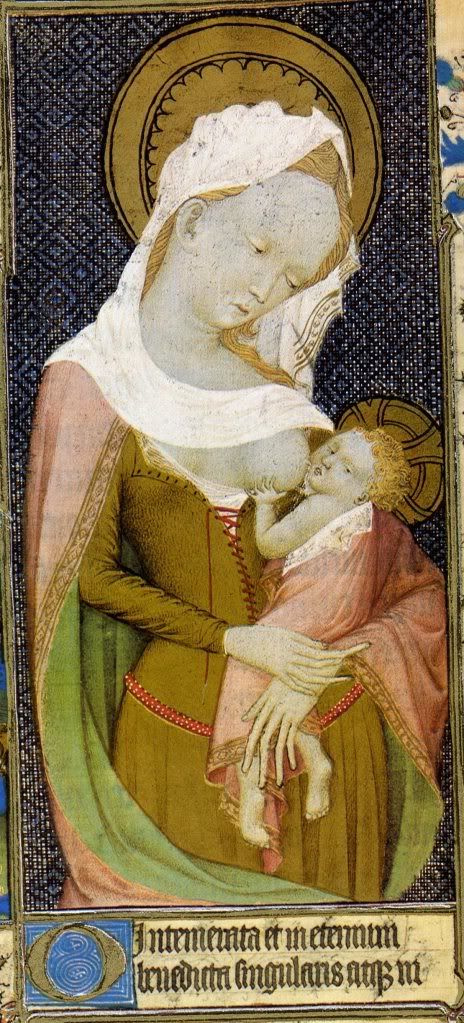
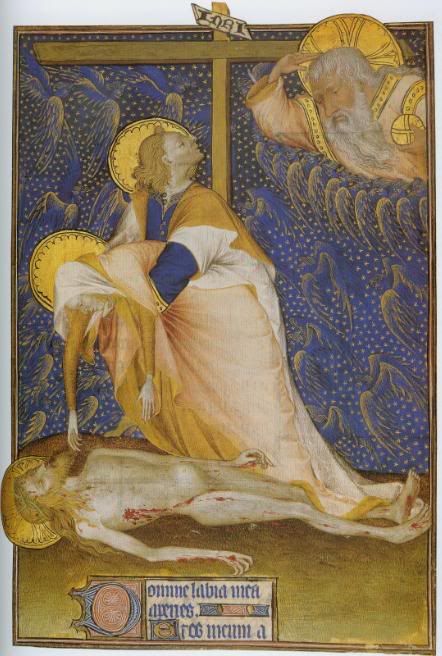
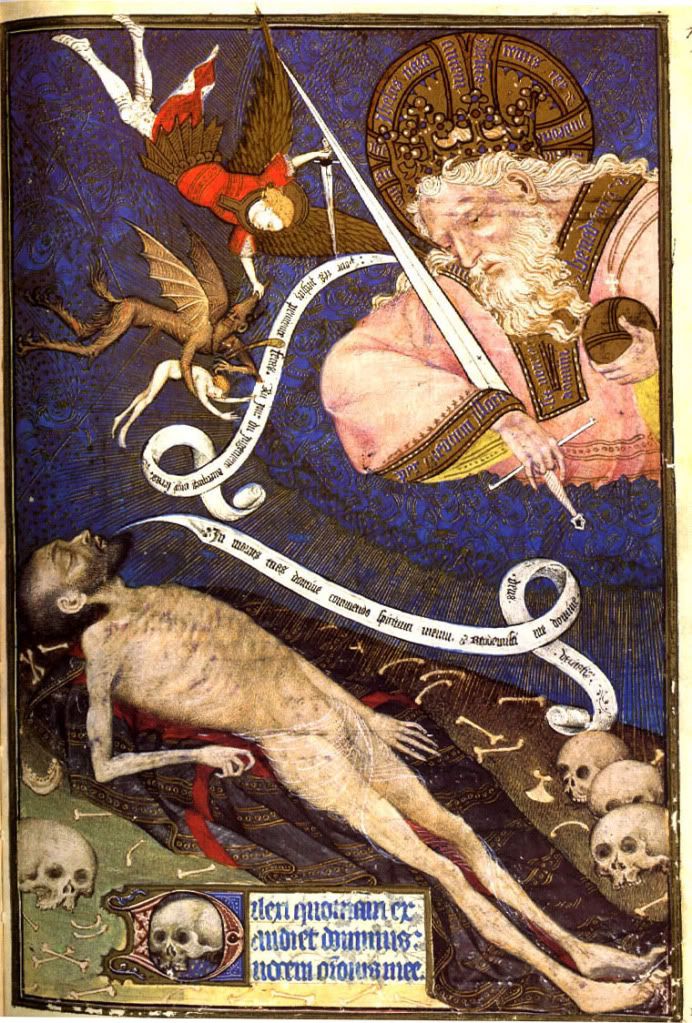
And I've got three of 'em! In the early fifteenth century, The Master of the Rohan Hours summarized the logic of Cur Deus Homo in three miniatures...or at least that's what my term paper attempts to prove.


With the end of the academic year approaching, I've been crazy busy with papers and presentations and exams. I haven't really had time to craft. I miss it and I miss blogging! In the absence of new crafty stuff, I thought I'd share this instead. It inspires me and makes me want to create beautiful things. I'm now brimming with ideas to try as soon as I graduate!

What inspires you? Tell me or send me links!

Sunday, March 29, 2009

Women's History Month--Take Three

Well, the month of March is almost over, and I have to admit failure. I just did not have the energy to do research and really put together any decent essays on quilt history. I've grown very sick of the library, and not even for my blog could I drag myself there for any lengthy period of time. I did, however, do some internet browsing and a little extra reading on various topics, so the entire exercise wasn't a complete wash. Plus, I've decided to extend (or rather, remove) the end date. Sometime, when you least expect it, I'll finish up an essay on something fabulously interesting. Just wait.

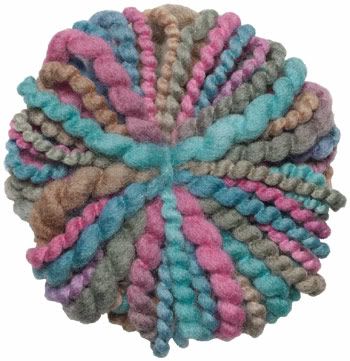
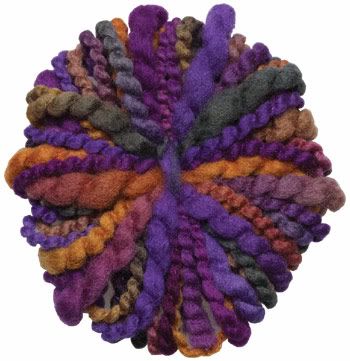
In the meantime, however, here's a cute little thing that my mother called my attention to. The Schaefer Yarn Company in Interlaken, New York has a series of color concepts for memorable women. Its kinda like roses...different colors and patterns that the company creates are named in honor of special women in history. There are a lot of lovely yarns on their website that you can browse through, but here were a few of my favorites.

SOPHIA SMITH
(Fabulous woman who endowed Smith College, one of the Seven Sisters)


INDIRA GANDHI
(Prime Minister of India from 1966 until her assasination in 1977)
CATHERINE THE GREAT
(Emperess of Russia from 1762-1796)

Someone stole the iron that was in the laundry room, so no sewing until I either buy one or hunt one down. The universe is conspiring against me...I really meant to get some things finished up this weekend!!

Wednesday, March 18, 2009

Women's History Month--Take Two

I know, I know...I promised a textile history post. I'll get to it...I promise...but its coming a bit slower than I expected. In the meantime, I thought that a post here and there honoring the efforts of different people to maintain and celebrate the interaction between women's history and textiles was in order. I'm starting off with Judy Chicago.

This last weekend, during my mini-vacation in New York City, I decided that I needed to put my money where my mouth is and do something special for Women's History Month. Instead of my planned visit to The Cloisters (I'm a medieval historian...the cloisters are like Mecca) I trecked all the way down to the Brooklyn Art Museum to see a work there that I have long admired.


The Dinner Party by Judy Chicago is an iconic piece of feminist art. The work recognizes (invites to the table) women who have been overlooked, misinterpreted, or undervalued by popular history. 39 women (both mythical and historical) are represented at the table, and the names of 999 others on the floor (names can be found here). It is impossible to understand how powerful this piece is, without seeing it in person. Before going, I had studied the pictures, I had read reviews and explainations, and I thought I understood. I didn't though, and you can't until you're there.

As I walked around the table, reading the names, I felt an odd sort of interaction with it. I felt like I was a server, or maybe an intern who had helped to set the whole thing up...both part of the dinner and yet still seperate. I experienced a little thrill of excitement and pride every time I recognized the name of a woman that I admired who had been given a place of honor. I felt both curiosity and shame everytime I encountered a name that I didn't know. So special a woman, and I didn't know her? That wasn't right! I could have stayed there for hours, starstruck.

Now, I'm sure many of you are thinking to yourself, "this is all well and good, but what the heck does this have to do with textiles." Well now, I'm glad you asked, because this is what makes The Dinner Party so absolutely amazing (at least in my opinion). As a large scale installation, there is no single medium or technique used. Instead, the work is comprised of many materials and methods. Many of the methods used, however, are what are regarded as traditionally feminine arts.

The entrance banners (one of which you see here) are woven.


Each place setting contains a painted china plate and a runner, personalized to fit each woman and her period. The embroidery used in Hildegarde of Bingen's runner, for example, was common in ecclesiastical garments of the medieval period.


Susan B. Anthony's runner contains elements of friendship or memory quilts that were popular at the end of the nineteenth century. Emboidered in the white rays are names of other prominant sufferagists.


The website (which I linked to about a kagillion times) is fabulous. I really encourage you to take a look and enjoy both the beautiful art contained in these textiles and the rich history that they honor. Judy Chicago understood and honored that fact the women's history and textiles are intertwined. Much can be expressed through them, both in the past and still today.


BN: All images are from the Brooklyn Museum webpage. The original context is accessable by clicking the image.

Monday, March 2, 2009

I Betcha Didn't Know...

...that in 1987, Congress declared March "Women's History Month." Being both a proud feminist and a rather historically-minded individual, there is no way in heck I'm passing this up. BUT, since this is technically a craft blog, I'm restricting myself to textiles. That's more than okay though...textile history is really under-acknowledged and there is a ton of cool stuff to talk about! I'm going to try to put together a few posts during the month of March about textiles and their place/impact on women's history. I'm hoping to get to quilts as activism for sure, but we'll see where the spirit moves me.

WHY-TEXTILES-ARE-IMPORTANT-TO-WOMEN'S-HISTORY-AND-WHY-THE-DISCIPLINE NEEDS-TO-GET-ITS-REAR-IN-GEAR-1O1.

Textiles are a hugely important part of women's history, first and foremost because of their ubiquity in daily life. Take the Middle Ages for example. Women spent something like 75% of their time in textile production (I can't remember the exact percentage, but its close to that). They raised the sheep, they sheered them, washed the wool, carded the wool, spun the wool, wove the cloth, cut the cloth, sewed the garments and then washed and mended them.

American women, hundreds of years later, were as equally occupied with textiles. Young girls began sewing as early as two or three and continued until they were too old to hold a needle. Women sewed for basic necessity (covering and warmth), they sewed for beauty, they sewed for friendship, they sewed for charity, they sewed for memory, and they sewed for activism.

Much of the history of women is in textiles. While written history is often elitist, textiles have less of that bias. Until recently (and only in certain parts of the world) only a few women wrote while virtually every woman sewed. Stories are often told in textiles that cannot be found anywhere else.

Unfortunately, much of that unique and irreplacable history is already gone. Textiles don't survive well in the archaeological record. After a couple hundred years, its usually game over. There are exceptions of course, but its heartbreaking to think of what was lost. We didn't just lose a smock or a weaving, we lost the history of Ethelfrith and Brunhilde. We didn't just lose a slave quilt, we lost Mary and Tessie. This makes the few textiles that remain all the more precious.

Just as frustrating, however, is the fact that textiles have yet to be recognized for their full scholarly potential. Quilt history, for example, only really emerged after the 1970s, and to this day, the body of scholarship is relatively small. Its getting better, but we still have a long way to go. Quilt history furthermore remains as a specialized branch of historical studies, largely segregated from more mainstream scholarship. If you can show me a general history book of the Civil War that cites a quilt as a source, I'll eat my hat.

A huge portion of women's history is being eaten by moths. A huge portion of women's history is placed out of the mainstream in a specialized branch of scholarship that the general public is largely ignorant of. A huge portion of women's history is disregarded, not through malice, but through ignorance. As crafters and lovers of this legacy, we are the people in the best postition to stop this trend and preserve the histories contained in textiles. Research the heirloom quilt you keep secreted away and share the info via the web. Ask your grandmother about the embroidered sampler she keeps tucked away in her ceder chest. You don't need a phd to do this, you just need to care. Textiles are important. Women's history is important. Please, please, please, lets do something about this.

*****
General Women's History Day Sources:
Library of Congress
The History Channel
National Women's History Project

Reader-Friendly Quilt and Textile History Sources (more to come with each specific topic):
Hearts and Hands: Women, Quilts and the American Society
America's Quilting History